
Die Casting Plus CNC Machining: Datum, Allowance and Finish Planning
Coordinate casting datums, machining allowance, critical features and final finish before combining die casting with CNC operations.
 Zaid ArshadManufacturing Content Author · KEC Tour
What to specify for this part
| Control point | Define in the RFQ | Risk if omitted |
|---|---|---|
| Feature ownership | As-cast, machined or finish-controlled | Tolerance is assigned to the wrong process |
| Machining stock | Allowance on functional surfaces | Skin variation or porosity appears during cut |
| Datum transfer | Cast locating points to machined datums | Setup variation consumes tolerance |
| Sequence | Machining, deburr, finish and final inspection | Coating changes fit or masks defects |
Partition the drawing
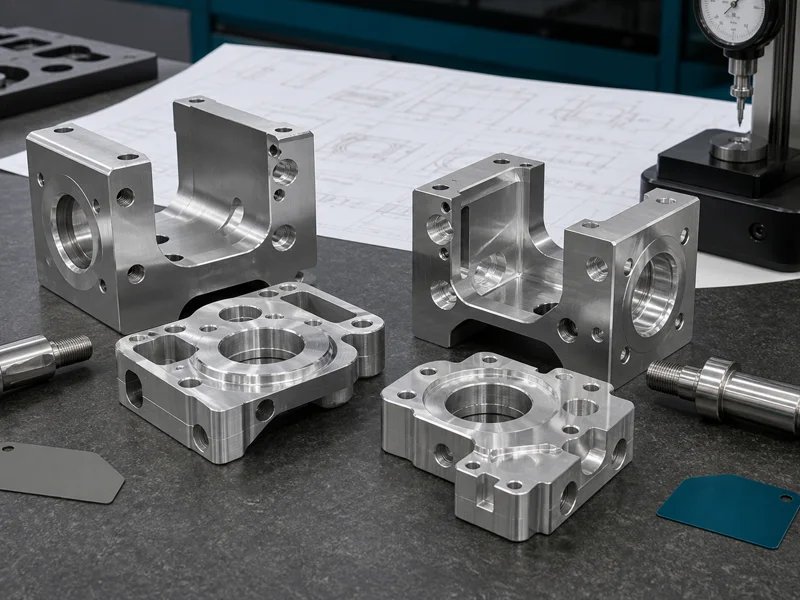
Label as-cast surfaces, machined surfaces, parting line, draft direction and cosmetic zones. Give functional machined features their own datum scheme tied to assembly. Use separate tolerances for as-cast envelopes and machined interfaces. A machined bore should be referenced to the datums that locate the finished assembly. The drawing must make clear which operation owns each final requirement.
Plan machining allowance deliberately
Too little stock risks incomplete cleanup; too much increases cycle time and may expose subsurface conditions. Review allowance by location, casting process and expected variation. Review local stock allowance around bearing seats, bosses and sealing faces. Uniformly adding material may increase both cycle time and the chance of opening internal porosity. Trial sections or other agreed evidence can help confirm the allowance for the selected casting route.
Design stable locating features
Cast pads or bosses used for workholding need adequate area and controlled relationship to the part. The route should explain how the first machined datums are created and reused. Create a stable first-operation seating arrangement, then transfer to machined datums for subsequent cuts. An irregular cast surface can tilt the part before the first reference plane is established. Record the locating pads and clamping method so repeat castings are loaded consistently.
Sequence finish and verification
Identify dimensions accepted after coating, masked zones and thread protection. First articles should include casting condition, machined dimensions, cosmetic review and any specified leak or functional test. Machining can expose pores that were hidden beneath the casting skin. Define the inspection or approved leak-testing point after relevant machining and finishing. If impregnation or repair is proposed, require engineering approval and traceable records rather than silently treating it as ordinary cleanup.
Frequently asked questions
Why machine a die casting?
Machining provides precision interfaces, sealing faces, bores and threads that the casting alone may not hold economically.
Can every surface be machined?
Technically possible in some cases, but it may erase the economic advantage and expose subsurface variation.
Who chooses machining allowance?
It should be agreed by casting and machining engineers against the drawing and actual process capability.
What files should the RFQ include?
Final model/drawing, as-cast and machined definitions if available, material, finish, volumes, critical features and test requirements.
Sources and further reading
Send KEC Tour the relevant drawing and interface requirements for review of the proposed manufacturing route.

Zaid Arshad
Manufacturing Content Author · KEC TourZaid Arshad writes practical manufacturing guides for engineers and sourcing teams evaluating custom fittings, CNC-turned parts, sheet-metal components, stampings and die-cast parts. His articles focus on clearer RFQs, supplier evidence, inspection planning and drawing-to-production decisions.
View author profileRelated engineering guides

Engineering Changes for Custom Metal Assemblies: Control the Cutover
Link revised drawings, purchased parts, work in progress and inspection so a design change reaches the correct production units.
Read article
Burr Direction on Stamped Parts: Put the Functional Edge on the Drawing
Specify the acceptable edge condition and orientation where stamped parts contact seals, wires, hands or mating surfaces.
Read article
How to choose stainless steel grades for non-standard fittings
A practical guide for balancing corrosion resistance, machining stability, pressure use, surface finish, and cost.
Read articleTurn your requirements into a production-ready RFQ.
Share your CAD file, material, critical dimensions, finish and target volume. KEC Tour will review the process route before quoting.