
Die Casting Porosity in Leak-Critical Parts: Plan Before Tooling
Connect casting design, machined surfaces, inspection and leak acceptance before committing to a pressure-containing part.
 Zaid ArshadManufacturing Content Author · KEC Tour
Identify where sound material is essential
Mark sealing lands, threaded ports, thin walls and other regions where porosity could affect function. Distinguish cosmetic requirements from pressure-boundary and structural requirements. A casting can look acceptable externally while containing internal discontinuities. The product designer and foundry should agree the relevant acceptance criteria before tooling so inspection is aimed at the actual functional risk.
Review geometry with the foundry
Wall transitions, local heavy sections and the overall filling and solidification route affect casting development. Ask the foundry to review the production design and proposed tooling approach using its appropriate engineering methods. Avoid assuming that a machined billet design can be transferred unchanged into die casting. Design changes need documented approval because they may affect stiffness, mounting interfaces or subsequent machining.
Plan machining allowance carefully
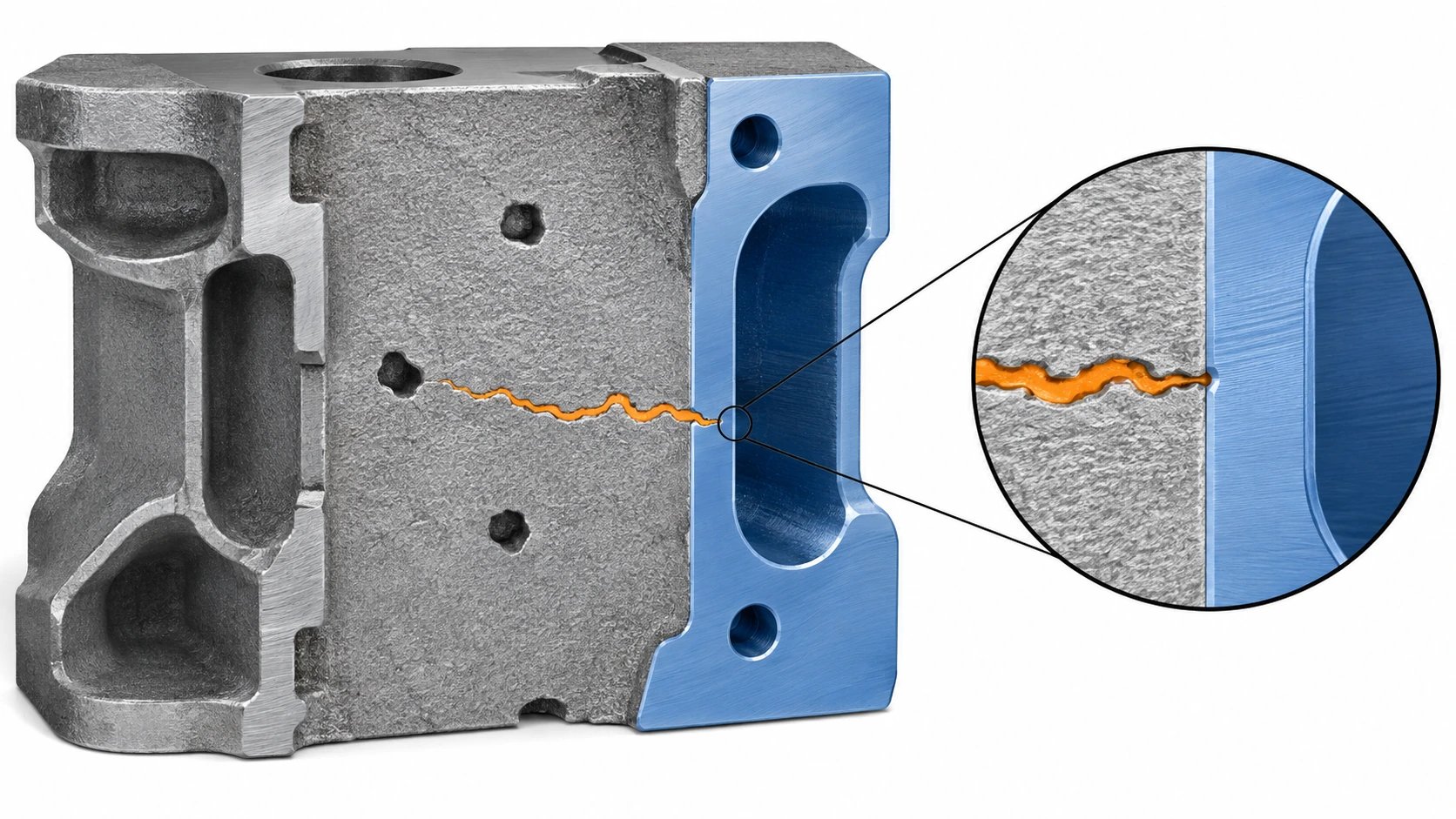
Machining can expose subsurface porosity that was not visible on the cast skin. Identify the final surfaces and material-removal depth during the casting review. Coordinate datums and allowance so the finished feature remains in the intended region of the casting. The foundry and machinist need the same final drawing and stock model to avoid developing separate assumptions about where sound material is required.
Choose inspection for the defect and function
Radiographic or other nondestructive inspection can reveal certain internal conditions, while leak testing evaluates a specified functional boundary. Neither automatically replaces the other. Agree the technique, coverage, acceptance reference and traceable result required by the product. A leak-test limit must be validated for the actual test method and assembly, not copied from a different casting or fixture.
Control approved recovery methods
If impregnation or another recovery route is considered, obtain explicit product-specific approval and define its verification requirements. Such a process must not be assumed to restore structural properties or make every porous casting acceptable. Record the treated lot and final disposition. Use recurring defects to drive casting-process investigation rather than letting an unrecorded recovery step conceal deterioration in the primary process.
Approval checklist and evidence
| Review item | Decision to make | Evidence to retain |
|---|---|---|
| Critical zone | Identify pressure-boundary and structural requirements. | Drawing with functional acceptance regions clearly marked. |
| Casting route | Review geometry and soundness with the foundry. | Approved tooling and process-development evidence. |
| Final machining | Consider pores exposed at the finished surface. | Coordinated allowance, datums and inspection location. |
| Disposition | Authorize any recovery route before applying it. | Traceable treatment and final functional acceptance. |
Worked review example
Illustrative scenario: a cast valve body passes an initial visual inspection, but machining a port exposes a connected pore path and the final part fails its leak test. The response reviews the critical casting zone, machining depth and process evidence together. Reducing the leak-test sensitivity would hide the symptom, while adding an unapproved sealing treatment would change the manufacturing route. The accepted corrective action must address the specified final function.
Information for the engineering review
- Critical casting zones
- Foundry design review
- Machining depth and datum plan
- Inspection and leak acceptance
- Approved recovery and lot traceability
Discuss this requirement with KEC Tour using the controlled drawing, the relevant mating interfaces and the review information above. Identify the decision that needs confirmation and the acceptance evidence expected with the first parts.
Sources and further reading
Frequently asked questions
Does a smooth cast surface prove there is no porosity?
No. Internal defects may be invisible at the exterior.
Can impregnation fix structural defects?
Do not assume it can. The design authority must approve any recovery route for the specific function.

Zaid Arshad
Manufacturing Content Author · KEC TourZaid Arshad writes practical manufacturing guides for engineers and sourcing teams evaluating custom fittings, CNC-turned parts, sheet-metal components, stampings and die-cast parts. His articles focus on clearer RFQs, supplier evidence, inspection planning and drawing-to-production decisions.
View author profileRelated engineering guides

Engineering Changes for Custom Metal Assemblies: Control the Cutover
Link revised drawings, purchased parts, work in progress and inspection so a design change reaches the correct production units.
Read article
Burr Direction on Stamped Parts: Put the Functional Edge on the Drawing
Specify the acceptable edge condition and orientation where stamped parts contact seals, wires, hands or mating surfaces.
Read article
How to choose stainless steel grades for non-standard fittings
A practical guide for balancing corrosion resistance, machining stability, pressure use, surface finish, and cost.
Read articleTurn your requirements into a production-ready RFQ.
Share your CAD file, material, critical dimensions, finish and target volume. KEC Tour will review the process route before quoting.