
How to Prepare a Custom Metal Parts RFQ: A Drawing-to-Production Checklist
Prepare a complete metal-parts RFQ with controlled drawings, material, quantities, finish, inspection and the information needed for comparable quotes.
 Zaid ArshadManufacturing Content Author · KEC Tour
What to specify for this part
| Control point | Define in the RFQ | Risk if omitted |
|---|---|---|
| Product definition | 2D drawing plus STEP model, revision and units | Wrong revision or model/drawing conflict |
| Material | Grade, condition, certificate requirement and substitutions | Incorrect performance or unapproved equivalent |
| Quality | Critical-to-function features, gauges and report format | Inspection effort is guessed or omitted |
| Commercial | Prototype and production quantities, destination and Incoterm | A low unit price hides tooling or freight |
Start with one controlled technical package
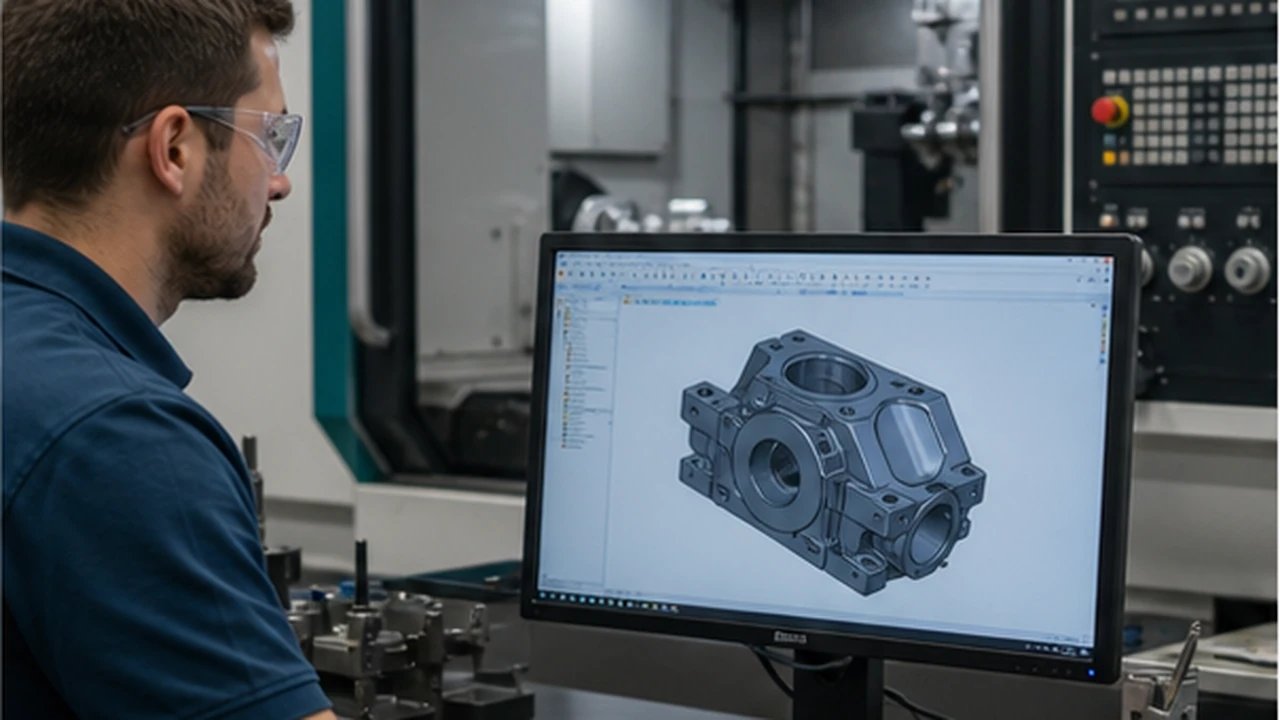
Put the part number, drawing revision, 3D model and specification list in one folder. State which file controls if dimensions conflict. Mark sealing faces, thread callouts, datums and cosmetic zones instead of asking the supplier to infer them. For a connector, the model may show the port but omit the thread class and sealing surface requirement. Add these to the drawing and verify that the revision identifiers match. A clear controlling document prevents the shop from resolving a conflict by choosing whichever file is easier to machine.
Separate must-have requirements from preferences
A must-have affects fit, safety or approval; a preference affects appearance or convenience. This distinction lets the manufacturer propose a lower-cost route without silently changing the design. Mark functional interfaces and explain the reason for unusually tight limits. A hidden exterior face may allow visible tool marks while the seal face cannot tolerate a scratch crossing its contact zone. This distinction gives the supplier a specific opportunity to reduce work without changing performance.
Ask for a quote breakdown you can compare
Request material, machining, tooling, finishing, inspection, packaging and freight as separate lines. Ask whether the quoted lead time begins after purchase order, deposit, drawing approval or material arrival. Ask whether fixture charges recur on each release and whether the inspection report is included. Compare a five-piece prototype and a 200-piece batch on the same material and finish basis. A quote that omits deburring or outside finishing is not comparable to a complete delivered-part price.
Close the loop before production
Record open questions in a clarification log. Approve the final route, revision and inspection plan in writing, then use the same identifiers on samples, reports and cartons. Track each clarification with its affected feature and approved answer. If the supplier proposes a larger corner radius, revise the controlled model before machining instead of leaving approval in a separate message. Confirm the first article against that final package and retain it with the order.
Frequently asked questions
Is a STEP file enough for quotation?
Usually not. A model shows geometry, while the drawing should control tolerances, threads, surface finish, material and inspection notes.
Should every dimension be tightly toleranced?
No. Tighten only features tied to function, fit or sealing; unnecessary tolerances raise cycle time and inspection cost.
What quantity should I request?
Ask for the prototype quantity and realistic annual or batch volumes so tooling and process alternatives can be priced.
Can KEC Tour quote from a sample or photo?
KEC Tour accepts drawings, samples or photos, but measurable requirements and a controlled drawing are still needed before repeat production.
Sources and further reading
Send KEC Tour the relevant drawing and interface requirements for review of the proposed manufacturing route.

Zaid Arshad
Manufacturing Content Author · KEC TourZaid Arshad writes practical manufacturing guides for engineers and sourcing teams evaluating custom fittings, CNC-turned parts, sheet-metal components, stampings and die-cast parts. His articles focus on clearer RFQs, supplier evidence, inspection planning and drawing-to-production decisions.
View author profileRelated engineering guides

Engineering Changes for Custom Metal Assemblies: Control the Cutover
Link revised drawings, purchased parts, work in progress and inspection so a design change reaches the correct production units.
Read article
Burr Direction on Stamped Parts: Put the Functional Edge on the Drawing
Specify the acceptable edge condition and orientation where stamped parts contact seals, wires, hands or mating surfaces.
Read article
How to choose stainless steel grades for non-standard fittings
A practical guide for balancing corrosion resistance, machining stability, pressure use, surface finish, and cost.
Read articleTurn your requirements into a production-ready RFQ.
Share your CAD file, material, critical dimensions, finish and target volume. KEC Tour will review the process route before quoting.